When it may be considered
- Flexor tendon injuries affecting finger or thumb bending
- Extensor tendon injuries affecting straightening
- Selected delayed ruptures or previously repaired tendons requiring reconstruction
Specialist hand surgery
Repairing injured flexor or extensor tendons to restore controlled finger and thumb movement.
Book a consultation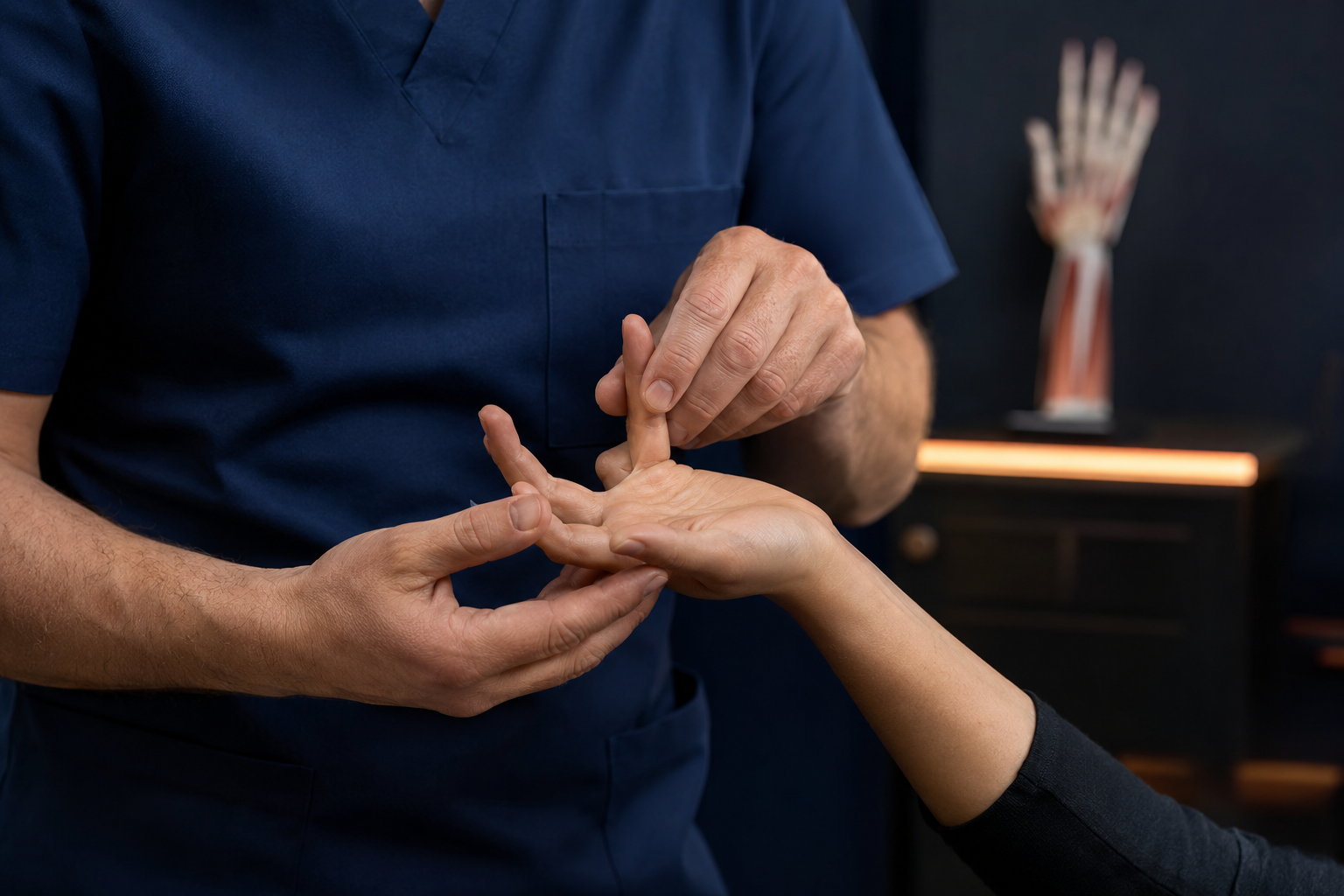
Understanding the procedure
Tendons connect muscle to bone and transmit the force that moves the fingers and thumb. A divided or ruptured tendon may prevent normal bending or straightening. Repair aims to restore continuity while protecting the nearby nerves, vessels and joints.
Your consultation
Symptoms, examination findings, work, hobbies and the demands placed on your hand are considered together. Relevant imaging or nerve studies are reviewed where required.
You will receive a clear explanation of the available options, likely benefits, limitations, material risks and expected rehabilitation before deciding how to proceed.
Common questions
The repaired tendon needs protection while also gliding enough to limit stiffness and adhesions. A specialist hand therapist guides this balance.
No. Tendon healing and rehabilitation take time. Progress depends on the injury, repair and adherence to the prescribed programme.
Stiffness, adhesion, reduced movement and re-rupture are among the issues discussed during consultation and consent.
This information is general and does not replace an individual consultation. The most appropriate treatment and recovery plan depend on your diagnosis, examination findings and personal circumstances.
Private consultations
Discuss your symptoms and receive an individual assessment with clear, considered advice.
Book a consultation