When it may be considered
- A contracture that interferes with washing, dressing, work or other activities
- Progressive finger deformity where surgery is considered appropriate
- Recurrent disease requiring individual assessment
Specialist hand surgery
Treating Dupuytren’s contracture when progressive cords prevent the fingers from straightening.
Book a consultation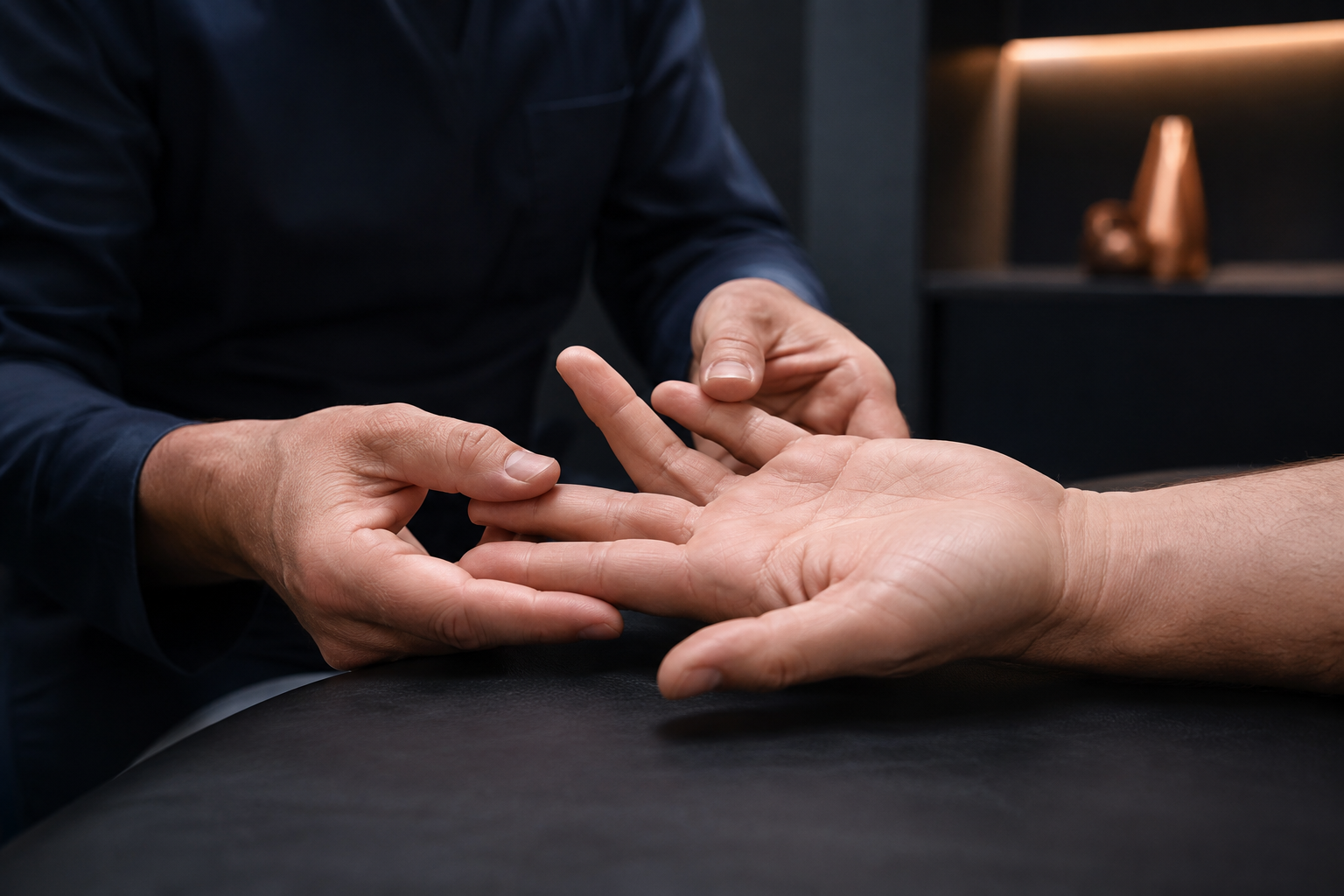
Understanding the procedure
Dupuytren’s disease causes thickened tissue in the palm to form nodules and cords. As a cord contracts, one or more fingers may be drawn towards the palm. Fasciectomy removes the affected tissue responsible for the contracture, aiming to improve extension and hand function.
Your consultation
Symptoms, examination findings, work, hobbies and the demands placed on your hand are considered together. Relevant imaging or nerve studies are reviewed where required.
You will receive a clear explanation of the available options, likely benefits, limitations, material risks and expected rehabilitation before deciding how to proceed.
Common questions
Surgery treats the existing contracture but does not remove the underlying tendency to Dupuytren’s disease. Recurrence or progression can occur.
The decision depends on the degree of contracture, the joints involved and how the hand is affecting daily life rather than the presence of a painless nodule alone.
Therapy and splintage are commonly used to support movement, wound care and function after fasciectomy.
This information is general and does not replace an individual consultation. The most appropriate treatment and recovery plan depend on your diagnosis, examination findings and personal circumstances.
Private consultations
Discuss your symptoms and receive an individual assessment with clear, considered advice.
Book a consultation