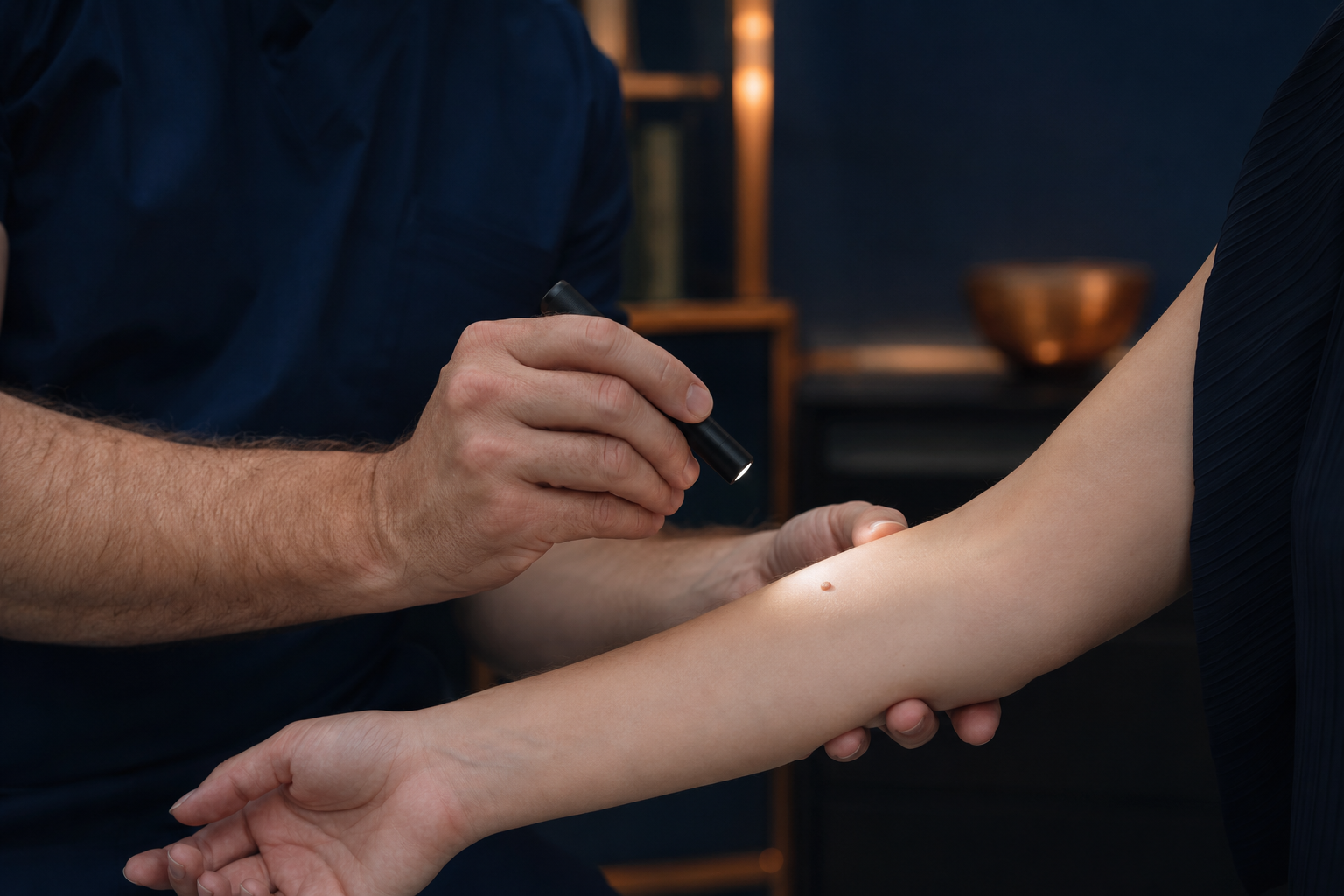
Understanding the procedure
What does treatment involve?
A wide range of benign lesions can affect the skin and superficial tissues. Suitability for removal depends on a confident working diagnosis, the symptoms or concern caused, the lesion's site and the scar or reconstruction that treatment would create.
01When it may be considered
- Selected benign lesions causing repeated trauma, irritation or functional difficulty
- A lesion suitable for removal under local anaesthetic or an agreed operative setting
- Cases where the expected benefit justifies the scar and procedural risks
02Your treatment
- Detailed history and examination before any procedure is recommended
- Excision or another appropriate method selected for the lesion and anatomical site
- Histopathological assessment when required to confirm the diagnosis
03Recovery and rehabilitation
- Aftercare is tailored to the wound, body area and closure method
- Temporary swelling, bruising, tenderness and altered sensation may occur
- Scar maturation continues for many months after the skin has healed
Your consultation
Assessment before recommendation.
Symptoms, examination findings, work, hobbies and the demands placed on your hand are considered together. Relevant imaging or nerve studies are reviewed where required.
You will receive a clear explanation of the available options, likely benefits, limitations, material risks and expected rehabilitation before deciding how to proceed.
Common questions
Useful information
01Which benign lesions do you treat?+
Suitability is assessed individually. Some lesions are best managed by dermatology, another specialist or an NHS diagnostic pathway.
02Can removal be performed at the first consultation?+
Usually the lesion should first be assessed and treatment planned. The setting, consent, pathology arrangements and aftercare must be appropriate.
03Is a good cosmetic result guaranteed?+
No. Careful planning aims to place and close the scar well, but all skin surgery leaves a scar and healing varies between individuals.
This information is general and does not replace an individual consultation. The most appropriate treatment and recovery plan depend on your diagnosis, examination findings and personal circumstances.
Private consultations
Begin with a conversation.
Discuss your symptoms and receive an individual assessment with clear, considered advice.
Book a consultation →