Understanding the procedure
What does treatment involve?
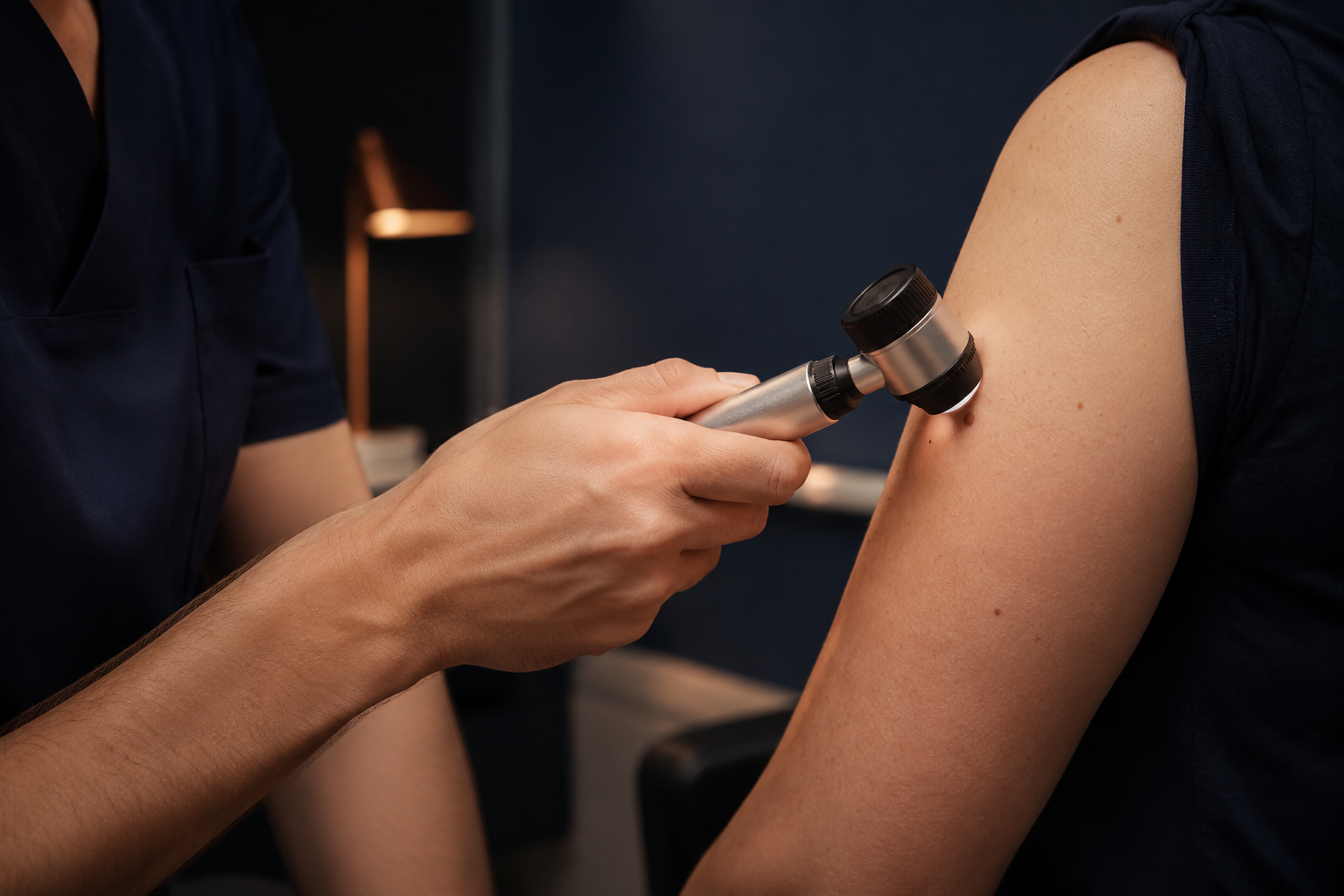
Moles, also called melanocytic naevi, are common skin lesions. Selected benign-appearing moles may be removed because of repeated irritation, symptoms or personal concern. A changing or suspicious lesion requires an appropriate diagnostic pathway rather than treatment based on appearance alone.
01When it may be considered
- A benign-appearing mole that catches, rubs or becomes repeatedly irritated
- A lesion where excision and histopathological confirmation are appropriate
- A patient who understands that removal replaces the mole with a permanent scar
02Your treatment
- Clinical examination and review of any history of change or symptoms
- Referral through an appropriate skin-cancer pathway if concerning features are identified
- Complete excision or another agreed technique with pathology where indicated
03Recovery and rehabilitation
- Wound care and suture removal depend on the anatomical site
- Redness and firmness are normal during early scar maturation
- The final scar varies with site, skin type, tension and individual healing
Your consultation
Assessment before recommendation.
Symptoms, examination findings, work, hobbies and the demands placed on your hand are considered together. Relevant imaging or nerve studies are reviewed where required.
You will receive a clear explanation of the available options, likely benefits, limitations, material risks and expected rehabilitation before deciding how to proceed.
Common questions
Useful information
01Can a mole be diagnosed from a photograph?+
No definitive diagnosis should be made from a website photograph. Any lesion of concern requires an appropriate clinical assessment.
02Will removal leave a scar?+
Yes. Surgical removal exchanges the mole for a permanent scar. Its likely position, length and behaviour are discussed before treatment.
03What if a mole looks suspicious?+
If the history or examination raises concern, investigation or referral through the appropriate diagnostic pathway will be recommended.
This information is general and does not replace an individual consultation. The most appropriate treatment and recovery plan depend on your diagnosis, examination findings and personal circumstances.
Private consultations
Begin with a conversation.
Discuss your symptoms and receive an individual assessment with clear, considered advice.
Book a consultation →